Showing posts with label Antler. Show all posts

Saturday, November 15, 2014

A Gem of a Bird Sighting

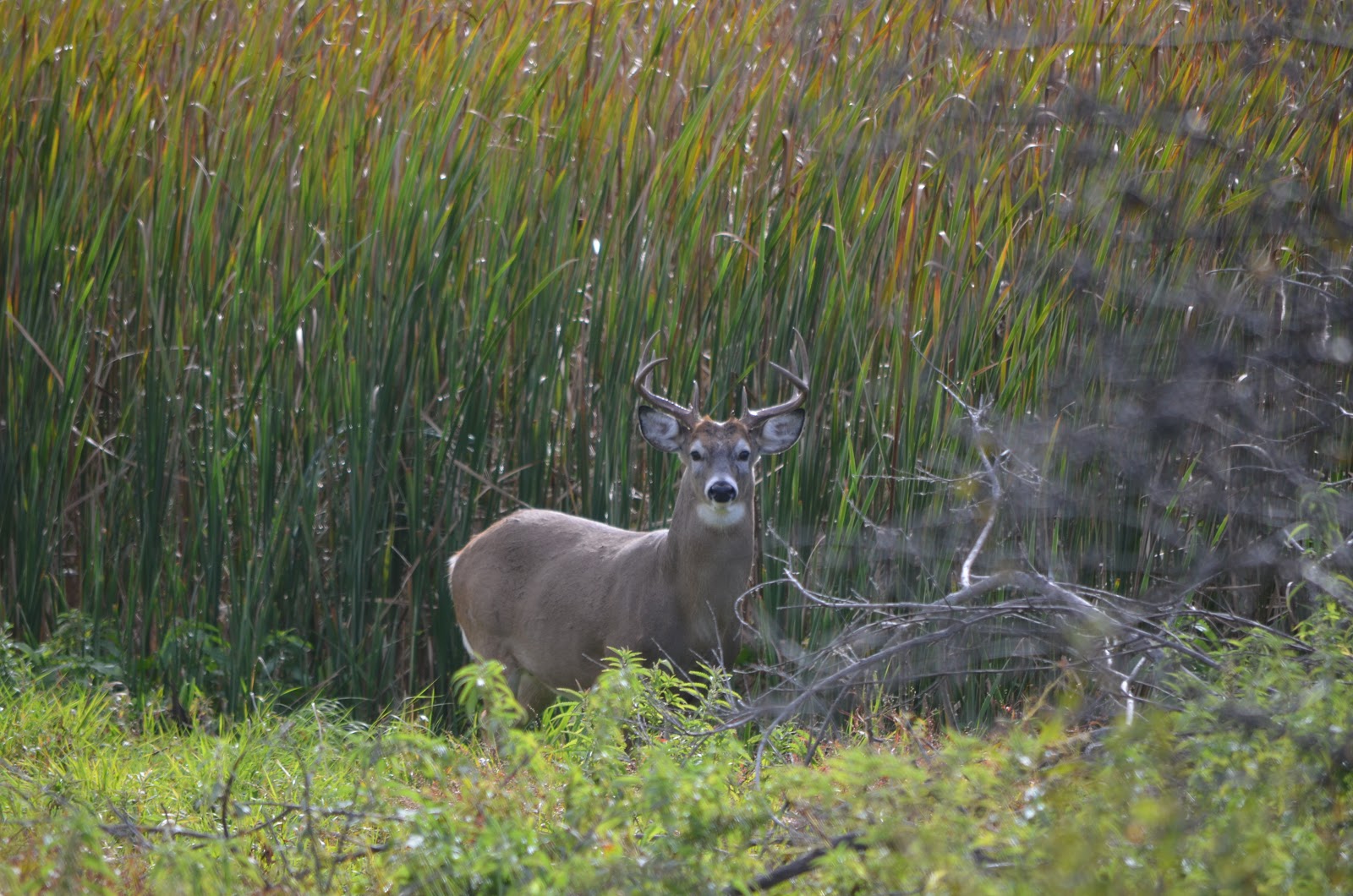
Just a day or two ago, a birder friend of mine who frequents the Palmer Lake Park area, notified me of a most unusual sighting. When I heard the news I could hardly believe it. The particular bird was a species of Owl that is rarely seen, even by the vast majority of bird watchers. But not necessarily for reasons of having a small population. Rather, this Owl is highly nocturnal, very small, and moves very little during the daytime. Like a few other species of Owl it is actually considered "common, but rarely seen." My friend volunteered to meet me at the park today in hopes that we could find it again together. It was 10am and there was a touch of hoarfrost on the trees still left from this morning. It also felt like it might start snowing at any moment. I paced nervously back and forth, mulling over the odds of whether the bird would still be there or had moved on. Finally my friend arrived and we hiked a short distance to the area. There smack dab in front of me was in fact a Northern Saw-whet Owl! At this time I knew very little about this species other than it was small. Well "small" is a relative term and I wasn't quite fully understanding of just how small this bird actually is. Because of it's "square-ish" head shape and stature, my friend had compared it's size to that of a "can of pop." That comparison was hard to believe, that is until I saw the bird in person. It was in awe over it's diminutive proportions and equally in awe of just how little it moved even though we stood just 12 to 15 feet away from it. It appeared like a statue, with only the very slightest of slow, drawn out movement. In viewing the bird for only a few minutes, I fully understood why this was such a special sighting. Indeed the reason for it's extreme lack of movement was that our "daytime" was it's "nighttime." This bird likely just spent the entire night, and most of it's energy to hunt and feed itself. Now it was time to sleep, and equally important, to remain hidden from other larger predators. With the bird hardly having opened his eyes only halfway just to check us out, we decided to back off and hike around some other areas of the park for a while. At this point, I could have seen absolutely nothing else for the rest of the day and I would have still been on cloud 9 having added this very special bird to my "life list." It had begun snowing shortly afterward and as we made our way along, we both noticed a Doe underneath a large Buckthorn tree. Scanning through the tall grass, I picked up on a much larger Deer, a big Buck with a large neck and a healthy 8-point set of antlers. He was mostly hidden in the grass and this was the best photo I could muster. It seems like Bucks are harder to come by in the park lately, possibly due to the continued bow hunts sanctioned by the City of Brooklyn Park each Fall. In fact it seems like the Deer population in total has dropped considerably over the last year or so. In watching the Deer, we also noticed a bird perched near the very top of the same tree sheltering the Doe below. In the Fall and Winter time if you see one lone, robin-sized bird perched at the very top of a tree, you should look twice as we both have learned to do. For it could be...and it was this time...a Northern Shrike. I'll have to double check but I belive this is my first sighting of one this year! This is yet another special bird for all of it's own reasons. Unlike other birds it's size that eat seeds, berries and insects, this bird hunts and eats small rodents and other small birds! This would be comparable to the diet of other raptors, including the Saw-whet Owl seen earlier. However the Northern Shrike is not considered a raptor because it does not "catch" it's prey with it's feet –or talons, which it doesn't have. Instead it "hooks" it's prey, sometimes in mid-air with it's sharp and hooked bill. Further adding to the charm of this killer bird is the fact that it will often "impale" it's victim onto a sharp twig or even barbed wire. This is done for two reasons actually. Probably the most important is that so the Shrike can then pick and eat at it's prey without having to hold it's meal down with it's own feet. Though I have seen them do so. The second reason though is that the Shrike with catch more food than it can consume in a given day and will store, or "cache" it's meals for future consumption. So if you're ever out walking and discover a mouse or vole impaled upon a twig or even barbed wire, it was most likely placed there by a Northern Shrike! Pretty interesting bird huh? Definitely one of my favorite species. With the snow picking up and coming down in big white, fluffy flakes, the two of didn't see much more for the remainder of our hike. Having called it a day, we decided to see if the Saw-whet Owl was still there, so we hiked all the way back. As testament to how little this bird moves, we found that the little Owl had sat quietly this entire time in the exact same spot and simply let the snow begin to pile up on top of his little head! The more I learned about this Owl's behavior the more fascinating he became. This time he had his eyes open now, at least part way. We stood the same distance away just watching the snow pile up on his head while he did his best impression of an Owl statue. Something I noticed now that I hadn't before is that the small white markings on the top of his head. They seemed to be designed to resemble the falling snow that was now landing on him. What an interesting bird! I can't possibly give enough thanks to the friend who shared this sighting with me.

Saturday, November 8, 2014

Second Saturday in November

In the previous few years these are days that I would not have been to the park. Instead I would have been out Deer hunting. Like many Minnesotan's I'd grown up in a family where Deer hunting was a family tradition. I enjoyed some memorable times outdoors with my Dad, hunting in various places across the state. When my dad tired of the activity, I took it up again with some friends. Long story short, I too tired of it –but much earlier in life than my father had. I believe this is the 2nd year now that I've not gone and I really don't miss it at all. Since taking up nature photography, I get the "thrill of the hunt" every time I embark on a nature hike. And through my photos, I get to take and keep the things that I see. The first thing of note that I saw today was a White-breasted Nuthatch who shuffled around a tree just above me. This is one of those under-appreciated common birds that become even more common this time of year. It's "yank yank" call together with Chickadees and Blue Jays are the three birds that remind me most of Deer hunting. I decided to check out the "duck pond" on the southwest corner and was surprised to still see a couple of Northern Shovelers here! I was excited to find this species at the park at all this fall, but to have them still hanging around near mid November is even better. I saw what looked to be 2 females but no sign of a male. Shovelers are one of the first springtime Ducks I see each year at the park. Other than a Woodpecker and a Red-tailed Hawk I wasn't really seeing much else on this quiet day. I decided to hike through the woods to see what else I might find. To my surprise, I came across a shed antler deep in the woods on the north side. This is only my second shed find ever, but it was in such rough shape that I let it go. Covered in green mold and the tines chewed in half, I would think this shed must have fallen sometime this early spring. It was still neat to find and at least I have a photo to show it. I found it very fitting that I found this on opening day of Deer hunting, took a photo and then left it. I recently saw a quote somewhere that read "take nothing but pictures and leave nothing but footprints." I really like that phrase and it fits well with my new attitude towards nature.

Saturday, September 22, 2012

Little Birds and Big Deer


When I arrived at the park this Saturday morning I parked on the south side just to be different. I started my usual clockwise route but noticed a very small little bird hoping around near the ground by the small pond just off the parking lot. The lighting wasn't that great and so all I could make out at first was the silhouette. Though I'm not yet that familiar with them I began to recognize it as a Wren. Wrens don't seem like a common species in this park -to me anyway- as I'd only captured my first photo of one earlier this summer. Surprisingly I was able to inch my way closer and bend on one knee to get a better view without scaring it off. It scurried around quickly from one small log to the next, picking at various things near the surface of the water. I thought I'd never get this close to one again and so I snapped a vast amount of photos, hoping I'd eventually get something worthwhile. It was awesome to watch one this close up and get to see some of the tiny intricate patterning that makes them almost invisible against tree bark and natural textures. I'm not very sure but I would assume the species is a common House Wren. On the north side I was focusing on some more birds when something much bigger caught my eye. Against the tall cattails stood an enormous Buck with an 8-point rack. I'd barely noticed him and I'm sure he noticed me first. Even when it was clear to him that I'd spotted him, he stood as still as a statue not moving an inch. I took a few photos of him with different settings and he still never moved. I didn't noticed any Does around and so it looked as though he was alone. Looks like there will be another set of antlers to be on the lookout for come next spring! Earlier in my walk I'd spotted a few Ruby-crowned Kinglets but was unable to get a decent photo. This species is probably THE toughest to get good photos of as they seriously are changing positions approximately every one second. Most times about all you can do is to point and click wildly over and over trying to keep up with them and then hope somehow you managed to get one in the frame! Kinglets are becoming quite familiar to me now and I know a few things to look for -aside from their characteristically energetic behavior. They can be strikingly olive-green in color, have very obvious wing bars and eye-rings, but most of all it's the time of year that helps me realize what I'm seeing is a Ruby-crowned Kinglet. They are active and easy to see in early spring but disappear for most of the summer and now again are quite common in the fall. I would say there are more of them at the park in the fall than in spring but that's just my observation. I was pleased to realize after looking at this photo closer that I'd captured a male -as evident by the tiny bright red patch on the very top of his head.

Sunday, September 16, 2012

Mid-September Sights

This Sunday I had an afternoon walk at the park, arriving just after 2:00pm. It was another beautiful day to be outside and I saw just about everything from birds and deer to turtles and butterflies. The first thing I spotted was this young spike Buck on the southeast side of the park. He was foraging around the little drainage pond there right off the paved trail. I snapped a few quick photos and got a good look at his akward little mis-matched antlers. I figured there would be more deer around but he seemed to be by himself and then trotted away after just a minute or so of me watching him. After this I spotted a Bald Eagle, a Grey Catbird and then lastly this interesting bird perched just above water on the southwest side where the little creek connects to the Duck Pond. At first glance it seemed too large and skinny to for an Eastern Phoebe. I was also seeing it only from behind and there seemed to be an almost bluish-grey coloring that i don't typically associate with Phoebes. I started doing some research, thinking maybe it could be some kind of Pewee or Flycatcher. After reading and looking at quite a few photos I can honestly say it would take a more experienced birder to quickly pick up on the subtle differences between Phoebe's, Pewees and Flycatchers. That being said, here are my findings. Eastern Wood Pewees look extremely similar with little-to-no eye ring, yet they differ with a typically orange lower beak or "mandible." Most Flycatchers (with a few exceptions) also have an orange lower mandible AND tend to have a more prominent white eye-ring too boot. Based on this photo showing no eye-ring and a black upper and lower mandible, I would still say it is an Eastern Phoebe. I hope my ID is correct because I just can't say for sure. Later on I had the opportunity to spot and more easily identify a sparrow that is a lot less common than your average House or Song Sparrow. This is a White-throated Sparrow and I believe the very first one I've ever captured a photo of at the park! I've heard their very memorable song before but not had the opportunity to actually see one until now. Their song is worth hearing if you've never heard one before. Click here to listen to one!

Sunday, August 19, 2012

Great Sightings on Sunday

I arrived at the park this Sunday morning just after 11:30am. It was a beautiful day with puffy white clouds against a bright blue sky and the temp was somewhere around only 70 degrees. It was the kind of day you wish every day was like. The mosquitoes were virtually non-existent as well so I found that I could venture off trail even in shorts. I spotted a lot of good stuff today and was surprised to see when I got home that I'd taken over 120 photos! The first thing I saw was on the south side heading up the wood chip trail. A smaller than average bird flew across the trail and landed in some brush on the other side. It popped out again onto a larger tree and I could tell from the flash of bright yellow on the edges of it's tail that it was a female American Redstart. I've seen more than my fair share of Redstarts this year but I've only seen a female just once or twice. This was probably the 3rd time I've seen one so I really wanted to get a photo. They're hard to keep up with though as they move positions every 1 to 2 seconds. While the Redstart was hopping around, another bird had landed on the same tree and was sort of distracting me. I assumed it was a Nuthatch at first from it's size but mostly from how it walked almost headfirst down the trunk of the tree. It wasn't until I caught a glimpse of how drastically striped it was that I realized it wasn't a Nuthatch but a Black and White Warbler! This is only the 2nd time I've ever seen one so it was quite exciting. As usual when I see something so unique I end up scrambling for a photo, moving too quickly and getting blurry shots. I had a lot of options to pick from to post here but this one shows best the black and white striping pattern of this unique Warbler. Be sure to click on the photo for a larger view. Much later on the other side of the park I actually spotted 2 or 3 more of them! Along the way I came across a Hairy Woodpecker -the larger of the 2 most common woodpeckers (Downy and Hairy). He was excavating a Willow tree (?) looking for insects and allowed me to walk almost right up underneath him for a photo. These are such common woodpeckers that I often don't take the time to capture them but since we was so engrossed in his activities I figured I'd get closer. The interesting thing I noticed from this distance was just how much yellow coloring they have in their tail feathers as well as faint hints of yellow on their head. Hiking across the long straight trail on the north end, I spotted a deer moving with it's head down below the tall weeds. It was a ways off the trail but I thought maybe if I waited it would pop it's head up for a photo. When it finally did I was quite shocked to see that it was an 8-point Buck with velvet still covering most if his antlers! It was an impressive rack that looked even thicker with all that velvet. I thought it was kind of odd to still have velvet this late into the summer and especially on such a large, mature rack. The times I usually notice velvety antlers are much earlier in the spring. I don't know how he's gone this long without having it rub off. Maybe they're just growing that fast. I don't know but it was certainly a neat sight. Hopefully next Spring I'll be able to find at least one of those antlers after he's shed them!

Wednesday, April 4, 2012

Looking for the Other Half

I forgot to mention in my previous post that I did spend a while searching for the other half of the antler shed that I found on Sunday morning. With the ground being wet and wearing only my worn out tennis shoes, I gave up fairly easily after getting wet feet. This Wednesday evening though was nice out so I decided to go back to the same area -with hiking boots- and do some more thorough searching. I covered quite a lot of ground but didn't find the other half. I did however manage my first Bluebird photo of the year -though not a great one. He was perched on another of those dead trees and possibly also looking for a good place to nest. It was starting to get a bit dark and for the first time I chose to head back the way I came instead of going all the way around. On my way back I saw a group of 5 or 6 Deer and decided to futz around with the settings on my new camera for a better shot. It seemed to work and I was getting halfway decent images. In this light my old camera would have not picked up anything! I watched the group for a while which had at least one young one with them. Later I saw 2 or 3 more cross the trail in front of me. One stopped in it's tracks right on the trail to eye-up another park goer. When I was about back to my vehicle I could see a few more in a clearing just behind some trees. I thought maybe the light might be better here so I sneaked through the trees quietly. There with a Doe was a nice Buck with a full set of antlers. I thought March 28th would officially be the latest I've seen a Buck, but now I have a new record for the park on April 4th! It looks like there will still be more antler sheds for someone to find yet this year.

Sunday, April 1, 2012

Three Firsts on April 1st

Today was colder still than yesterday and with a brisk wind to boot. I almost opted for my winter hat but figured I could tough it out with just my baseball cap. I was hoping to see a Bluebird today and spent a lot of time just standing around and watching a small scrubby patch of woods near the east side baseball diamonds. The only thing I saw there was a Downy woodpecker. Shortly after though, I did spot my first Tree Swallow of the year. He was perched out on a dead tree with a nice round hole in the side. More than once the Swallow flew up to the opening and peered inside, checking out whether it would make a good home or not. I wanted to get a better photo and I decided to walk in towards the tree. The ground is very low and wet here so I was careful where to step. I'd only gone roughly 15 feet off of the paved trail when there lying at my feet was a very large Deer Antler! It was lying with the tines sticking upward and I could barely believe my eyes. I half thought that maybe somebody was playing a prank on me and I peered over both shoulders behind me to see if anyone else was around but there wasn't. I've looked and looked and looked for antler sheds at the park with no luck whatsoever and here today a little bird led me right to one! I always told myself that if I ever found one I would take a picture of it before I picked it up. I did so but only had my zoom lens with and wasn't able to get a very wide shot showing the surroundings. It does show however how easily it probably blended into the background against the dead cattails and grasses of the same color. It was the first shed I've ever found and it couldn't have been a nicer one! As I carried it with me around the rest of the park, lots of people came up to me to see it and ask questions. One couple walking past said "I bet you didn't find that today" to which I replied "I DID actually!" I think most people assume that Deer shed their antlers much earlier in the year. I'm no expert, but around here in the city -and Palmer Lake Park specifically, I've seen Deer with full antlers pretty late in the season. Last year I remember quite well spotting a Buck with antlers on March 28th. Maybe further north in the state, they drop them earlier? I don't know for sure. Regardless, I now firmly believe that my previous shed-hunting efforts have been much to early. Towards the northern end of the park I walked off the trail again, heading towards the sound of a bunch of Crows that had obviously found a raptor of some kind to bother. Eventually I flushed out the Raptor but it flew directly away from me and I couldn't tell exactly what it was. When I popped back out on the trail, another park goer was looking at my camera and asked me if I wanted to see an Owls nest. I followed him back out of the park to a tree just barely inside the park. About half way up, he pointed out what looked like a rather small, old Squirrel's nest and there sitting on it was a Great Horned Owl! I felt a bit bad being this close and I certainly didn't want to spook it, as it was obviously sitting on either eggs, or possibly even newly hatched chicks! I took just a couple of photos and then headed back. It was the first nesting Owl I've ever seen.